At our online federal party convention on October 11, 2024, we decided to delete the insertion "schulmedizinische" (conventional medical) from our party name. The new name is therefore "Partei für Verjüngungsforschung" (Party for Rejuvenation Research).
We previously used the term in order to distinguish ourselves from esotericism and movements such as homeopathy. Since the second half of the 19th century, "Schulmedizin" (conventional medicine) has unfortunately often been misused as a polemical term to disparage scientific medicine. In using the word, our party explicitly drew on the other meaning that the word has: the medicine that is taught at universities today - that is, evidence-based medicine. The reason why we chose "schulmedizinisch" and not directly "evidenzbasiert" (evidence-based) is that not everyone knows and understands the latter word.
Since the insertion "schulmedizinisch" is nevertheless perceived negatively by many and apparently comes across as unserious, we have now renamed ourselves once again. This also makes the name shorter and catchier. We hope that this change will bring us more positive attention in future elections.
In Germany, 1.5 billion is invested every year in research in the field of human medicine and health sciences.1 A large part of this money goes into research on specific diseases, such as Alzheimer's dementia or cancer.
But is research on specific age-related diseases really the best use of this money? How much does this research achieve if it is successful? How much (healthy) lifespan is gained once a treatment has been developed for one of the chronic diseases?
Chronic diseases in old age
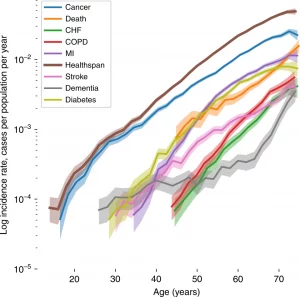
Incidence of the most common chronic diseases as a function of age2
The statistics shown here, from a study that can be read in Nature, show that the incidence of the chronic diseases shown rises exponentially from the age of twenty. What at first looks like a linear graph is in fact an exponential one if you take a closer look at the labeling of the y-axis. To illustrate: developing one of the chronic diseases shown at the age of 70 is a thousand times more likely than at 20.
In the study, participants who had more than one disease were counted for each disease. For example, if a participant had cancer and COPD, they were counted in the statistics once as a disease occurrence for cancer and once as a disease occurrence for COPD.
Exponential increase in the probability of disease with age
The probability of developing the chronic diseases studied increases exponentially for each of the diseases studied. This means that from a certain age onward, it is very likely that you will develop them. And that just one year later it is much more likely than one year earlier. And so on.
What this also means: if, from a certain age onward, you develop one of the chronic diseases, for example cancer, and actually manage to get rid of the cancer through successful cancer treatment, the next chronic disease, for example diabetes, will very likely be waiting for you shortly afterwards. As just explained, this is because with increasing age the probability of developing the chronic diseases mentioned is immensely high.
This means that lifespan will not increase much through the treatment of a single chronic disease.
That is why the current solutions, which focus exclusively on curing individual diseases, are both expensive and very inefficient if we want to make progress in our endeavor to live longer in good health. We need medicine that removes all the hurdles [Note: "hurdles" in the sense of age-related diseases/chronic diseases].
David Sinclair, "Das Ende des Alterns", p. 122
The end of healthspan
One of the lines (Healthspan) does not represent a disease, but the age at which the first disease begins - that is, the point at which healthspan ends. The starting point of a person's chronic illness. Interestingly, for most people healthspan ends with cancer, a myocardial infarction or diabetes, and only in very rare cases with death. This means that most people have a phase in their lives in which they are chronically ill before they die.
Clinical data
Interview data
Combined data
Events
%
Events
%
Events
%
Cancer
66,214
51.4
41,485
48.6
74,172
51.3
Diabetes
20,019
15.5
23,134
27.1
26,026
18.0
MI
25,649
19.9
10,150
11.9
24,751
17.1
Stroke
4731
3.7
6070
7.1
6902
4.8
COPD
6211
4.8
1484
1.7
5881
4.1
Dementia
769
0.6
2889
3.4
2706
1.9
Death
2411
1.9
0
0.0
2399
1.7
CHF
2850
2.2
231
0.3
1883
1.3
For the 300,447 participants in the study, the table shows which events ended their healthspan. Cancer and diabetes are the most common. Death ended the healthspan in less than 2% of all cases.2
Prolonging the period of illness
As we have just explained, developing and carrying out a treatment for one chronic disease does not bring much (healthy) lifetime. Usually the person then lives only a few years longer (in good health) than if they had not been treated. But these extra years are usually not spent in health, but in illness - one of the other diseases that have not yet been treated. As already explained above, this is because in old age the probability of developing each of the chronic diseases listed is many times higher than at a younger age. So being successful only in the treatment of a single chronic disease brings comparatively little additional quality of life.
We have reduced mortality more than we prevented morbidity.
Eileen Crimmins3
The most common chronic diseases - age as a risk factor
According to one study, 85-year-old men are diagnosed with an average of four different diseases, women with as many as five.4 They are "different ailments with different pathologies. (...) But aging is a risk factor for all of them. In fact, it is the risk factor."5
All in all, it therefore does not make sense to research exclusively the treatment of individual age-related diseases. But what would be a sensible complement?
Rejuvenation research, the repair approach and the information theory of aging
In addition to research on treatments for age-related diseases, another branch of research is probably needed: so-called rejuvenation research, which includes, among others, two fundamental approaches:
The repair approach: aging as the accumulation of damage that can be removed
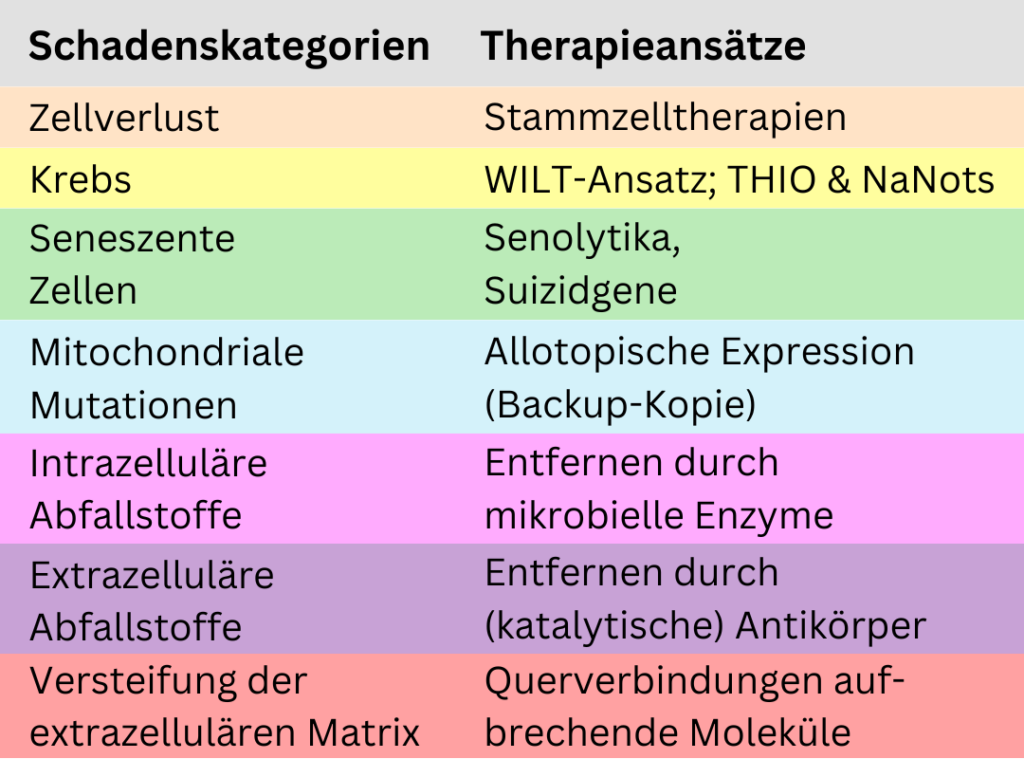
Repair approach: causes of aging according to Aubrey de Grey: damage categories and therapeutic approaches
In the repair approach, aging is interpreted as the accumulation of various types of damage that can be divided into 7 categories. The damage within one category is of a similar nature, so that it can be tackled with the same type of therapy.
The repair approach shifts the focus. While research on treatments for age-related diseases often gets bogged down in developing treatments for the symptoms or gets lost in complex metabolic pathways, the repair approach directs the focus to something else: the level of damage. So for the repair approach, you do not need to understand exactly how age-related diseases arise at the molecular level or how to combat the symptoms. You only need to understand the 7 types of damage well enough to be able to develop effective therapies against them. If you develop therapies against every category of damage - so the thesis goes - the age-related diseases we know today will not arise in the first place.
The information theory of aging: epigenetically reprogramming cells
David Sinclair's information theory of aging suggests that epigenetic changes are the cause of aging. These changes lead to a noise of information, so that the balance in the body is thrown into disarray, which leads to the symptoms of aging and the age-related diseases that we know. What exactly does that mean?
What is epigenetics?
Epigenetics deals with changes in gene activity that are not due to changes in the DNA sequence itself. These changes can cause certain genes to be switched on or off without changing the underlying DNA sequence.
It is completely normal for certain genes to be switched on and off. This also determines, for example, whether a cell is a skin cell or a muscle cell: all the cells of a person contain the same DNA sequence, but different sections of the DNA are exposed. Only the exposed sections are expressed, so that corresponding proteins are produced, which act, for example, as enzymes. In this way, each cell can produce exactly the proteins that this specific, differentiated cell needs.
Epigenetics and aging
With age, however, it changes which sections of the DNA are exposed and which are not (information noise - information that is lost). As a result, some proteins are produced that should not be produced in this cell, and some that should be produced are not, for example enzymes for DNA repair. This creates an imbalance of proteins, which probably amplifies the information noise even further - a vicious circle.
Epigenetic reprogramming, that is, returning the cell's DNA to a state in which the relevant regions are activated and the others are deactivated, could therefore prove to be the key to rejuvenation.
Does rejuvenation research make research on treatments for age-related diseases unnecessary?
No! There is a large overlap between research on age-related diseases and rejuvenation research. Both approaches can benefit from each other. However, it is important to recognize that the approach of researching age-related diseases is not sufficient. And that rejuvenation research is a promising approach whose funding does not yet do justice to its potential for health and longevity.
Zenin, A., Tsepilov, Y., Sharapov, S., Getmantsev, E., Menshikov, L.I., Fedichev, P.O. and Aulchenko, Y. (2019). Identification of 12 genetic loci associated with human healthspan. Communications Biology, [online] 2(1). doi:https://doi.org/10.1038/s42003-019-0290-0.
Collerton, J., Davies, K., Jagger, C., Kingston, A., Bond, J., Eccles, M.P., Robinson, L.A., Martin-Ruiz, C., von Zglinicki, T., James, O.F.W. and Kirkwood, T.B.L. (2009). Health and disease in 85 year olds: baseline findings from the Newcastle 85+ cohort study. BMJ, [online] 339(dec22 1), pp.b4904-b4904. doi:https://doi.org/10.1136/bmj.b4904.
Sinclair, D.A. and LaPlante, M.D. (2019). Das Ende des Alterns. Dumont Buchverlag, p.124.
Cryoprotectants are liquids that protect biological material from freezing damage - for example, from crystallization. They work similarly to antifreeze, which we put in our cars in sub-zero temperatures to lower the freezing point of water.
Some Arctic and Antarctic animals (e.g. insects, fish or frogs) produce cryoprotectants (antifreezes such as glycerol or so-called antifreeze proteins) in their bodies to avoid freezing damage from the cold winter temperatures.
The freezing of water in the body causes two types of damage: mechanical and chemical. We have already addressed the mechanical damage in our previous posts: it occurs because sharp ice crystals form and cut through cell membranes or other tissue.
In addition, however, chemical damage also occurs. Normally, the water in a living organism is part of a solution consisting of many different types of molecules. When the water molecules freeze, they seek each other out and form pure frozen water that pushes all other molecules out of the ice. This leads to a high concentration of harmful solutes in the remaining liquid water. For this reason, vitrification (replacing the blood with a cryoprotectant that forms a glass-like state when cooled) has been standard in the cryopreservation of organs and in cryonics for more than 20 years.
Until the turn of the millennium, cryonicists used glycerol as a cryoprotectant. However, glycerol is quite toxic to our cells and not suitable for vitrifying organs or even a whole body. In 2001, the Alcor Life Extension Foundation therefore switched to B2C, a particularly concentrated form of the cryoprotectant VM3. At that time, VM3 was already commonly used in the vitrification of oocytes and renal cortex of mice. In addition, VM3 showed the lowest toxicity in the vitrification of the hippocampus (part of the brain) of rats. In 2005, there was another switch to the cryoprotectant M22, which the organization still uses today - more on this below.
Cryoprotectants: composition and mode of action
Every modern cryoprotectant consists of a mixture of penetrating and non-penetrating chemicals. Penetrating chemicals enter the interior of the cell and prevent ice formation there. Non-penetrating chemicals prevent the formation of ice between the cells. They do this by forming hydrogen bonds with the water molecules, thus preventing them from organizing into an ice lattice.
Penetrating and non-penetrating chemicals
The penetrating chemicals are regularly used together with the non-penetrating chemicals, because ice tends to form extracellularly rather than intracellularly (the water flows out of the cells and then crystallizes in the spaces between them). If non-penetrating components are present, the penetrating components do not need to be as concentrated. This is crucial for high-quality cryopreservation, because the higher the concentration of penetrating chemicals, the more toxic the cryoprotectant. The right mixture of penetrating and non-penetrating solutions can provide a high level of protection with low toxicity without compromising the quality of vitrification. We also now know that toxicity can be reduced further by adding so-called synthetic ice blockers to the mixture. Synthetic ice blockers (SIBs) are compounds that inhibit the growth of ice crystals. If they are part of the cryoprotectant, fewer toxic components are needed to still ensure good vitrification.
Method for measuring the toxicity of cryoprotectants
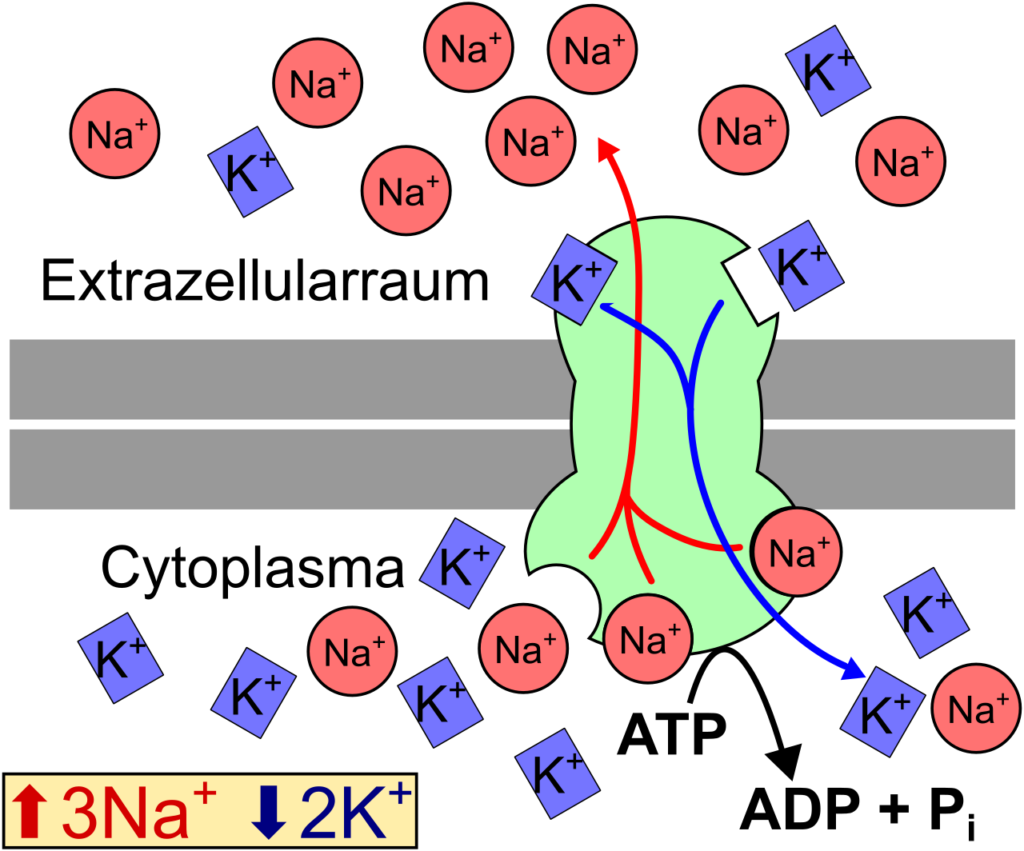
Cryobiologists have also found that the overall toxicity of a cryoprotectant can be predicted using a measure called qv*. 21st Century Medicine developed this measurement method based on tests with K+ and Na+ ions (positively charged potassium and sodium atoms) on rabbit kidneys. The Na+ concentration outside a cell is usually 10 times higher than inside a cell, while the K+ concentration inside a cell is usually 20 to 35 times higher than outside. The membrane enzyme Na/K-ATPase, using one molecule of ATP, transports three Na+ ions out of the cell in exchange for two K+ ions that are brought into the cell. If the cell membrane is ruptured or if a cell is no longer able to produce ATP, the K+/Na+ ratio changes.
qv* measures the average strength of the hydrogen bonds between the polar groups of the cryoprotectant and the water molecules of a solution. Quantitatively, qv* represents the number of water molecules per unit volume divided by the number of moles of polar groups of the cryoprotectant at the minimum concentration required for vitrification under standardized conditions. This measure thus enables the targeted production of solutions with the lowest possible toxicity.
Cryoprotectants currently in use
The two cryoprotectants mainly used in cryonics today are M22 (patented by the company 21st Century Medicine) and VM1. While VM1 is designed only for the cooling process, the designers of M22 also made sure to make the solution as non-toxic as possible (to minimize damage during rewarming). M22 is also better researched than VM1, but also considerably more expensive: its use costs a five-figure amount, while VM1 comes to only a few hundred euros.
The Cryonics Institute and Tomorrow Biostasis both use a version of VM1 that they have modified themselves. Tomorrow Biostasis gives as its reason that, thanks to the lower price of VM1, the company saves money and can instead invest in logistics, infrastructure and training of the standby teams in order to be able to respond more quickly.
The Alcor Life Extension Foundation uses M22 to ensure the best possible quality of cryopreservation and the best protection of brain structures currently possible.
Interestingly, both M22 and VM1 consist of the same core components: ethylene glycol and dimethyl sulfoxide (DMSO). M22 additionally contains formamide, which has only low toxicity in the presence of DMSO.
The least toxic cryoprotectant, M22, has been licensed by the patent holder 21st Century Medicine to the Alcor Life Extension Foundation since 2005 and is used by many laboratories worldwide for the cryopreservation of tissue samples. It gets its name from the fact that it is meant to be introduced into the patient at -22°C. M22 is based on the finding that dimethyl sulfoxide (DMSO) can neutralize the toxicity of formamide. That is why M22 contains exactly equal amounts of the two substances.
M22 contains two ice blockers - synthetically produced polymers that inhibit the nucleation of ice. The first consists of polyvinyl alcohol (PVA) and vinyl acetate and is sold by 21st Century Medicine under the name X-1000. The other, named Z-1000, is polyglycerol. It specifically inhibits the nucleation caused by the bacterium Pseudomonas syringae. Mixtures of the two ice blockers are more effective at inhibiting ice formation than either agent alone, which suggests that they complement each other by inhibiting different sources (bacterial and non-bacterial) of ice formation. In order to supportcell metabolism at low temperatures and to preventoxidative damage and edema (accumulation of fluid in tissue), M22 also requires a suitable carrier solution.
M22 causes considerable shrinkage of the brain during the perfusion of patients. In fact, cerebral dehydration can be an important factor in the vitrification of the brain and can even make it possible to preserve the brain with lower concentrations of M22.
The most significant advances in cryopreservation, such as the successful vitrification, rewarming and transplantation of a rabbit kidney in 2009, have been achieved with M22. However, unlike VM1 or older cryoprotectants, M22 consists of eight different components, and together with the carrier solution there are 15. Components such as the ice blockers have caused the cost of cryopreservation at Alcor to exceed that of preservation at the Cryonics Institute many times over. This naturally raises questions about costs and benefits.
The idea behind using M22 is that better vitrification will lead to a lower need for future repair technologies and consequently to faster revival. At present, however, this is pure speculation. Another advantage relates to PR or marketing: an organization that uses the most modern cryoprotectant, which many laboratories outside cryonics already use routinely, is also more likely to be perceived as reputable.
VM1
VM1 was developed by the Cryonics Institute's in-house cryobiologist, Yuri Pichugin - and, unlike M22, specifically for cryonics patients. The name stands for "Vitrification Mixture 1", which means that it is the first cryoprotectant used by the Cryonics Institute that actually enables vitrification (that is, a transition into a glassy state without a crystalline structure). An overview of the composition of VM1 can be found on the Cryonics Institute website.
The high stability and vitrification ability of VM1 have been demonstrated several times. Pichugin cooled and warmed 20 ml glass vials containing 60% and 65% VM1 solutions at a rate of only 0.1°C per minute and observed no ice formation. 65% VM1 with homogenized rat brain tissue (that is, tissue treated by cell disruption) showed no ice crystals after 14 days at dry ice temperature (-78.5°C). And even large quantities (two liters) of VM1 were still ice-free after 21 days at dry ice temperature.
Since VM1 is more toxic than M22, patients vitrified with it will need more advanced technologies for rewarming than patients in whom M22 was used.
Just like M22, VM1 also causes shrinkage of the brain. Adding sodium dodecylbenzenesulfonate can prevent this. However, cryonics providers currently refrain from doing so, because a certain degree of shrinkage is desirable. In the case of cerebral ischemia, that is, reduced or absent blood flow to the cerebrum, which most cryonics patients suffer, the shrinkage creates stability and facilitatesvitrification.
This week we submitted 4,756 verified supporting signatures to the Federal Returning Officer in Wiesbaden and have already received feedback that enough of them were valid. This means we are practically certain to be on the ballot in the European election on June 9, 2024. Officially, the Federal Electoral Committee will decide on the admission at a meeting on March 29.
Picture: Moritz Pohl with the 4,756 supporting signatures in front of the seat of the Federal Returning Officer
Fisetin is a flavonoid/polyphenol/secondary plant compound. It is a yellow natural dye, but above all it is a naturally occurring senolytic:
a molecule that can selectively trigger the death (apoptosis) of senescent, i.e. old, cells.1 This can both delay age-related diseases and increase lifespan.2
Why is it healthy and "rejuvenating" to eliminate senescent cells?
Senescent cells are cells that no longer divide (as protection against the development of cancer) but are resistant to cell death. They release pro-inflammatory signaling molecules (SASP), which can lead to inflammation of the surrounding cells and, in the worst case, to chronic inflammation of the entire body, and can paradoxically promote cancer. High levels of inflammation also damage tissues and organs. Removing senescent cells with senolytics reduces inflammation levels and the associated damage. Below, we take a closer look at the promising senolytic fisetin.
What are the health benefits of taking fisetin?
So far, six ways are known in which senescent cells can become resistant to cell death (SCAP = Senescent Cell Anti-Apoptotic Pathway). Depending on the cell type, different methods are used for this.
Most senolytics probably do not target all six pathways and therefore cannot kill all types of senescent cells. However, several studies have shown that fisetin can act against four of the six known types.3,4,5,6 Fisetin has, however, shown no senolytic effect on fibroblasts or on preadipocytes (fat cell precursors).
Fisetin as a highly effective senolytic
In one study, fisetin was tested alongside other molecules with senolytic activity: resveratrol, luteolin, rutin, epigallocatechin gallate, curcumin, pirfenidone, myricetin, apigenin, catechin and quercetin. In the tests in vivo in mice and in vitro on human adipose tissue, fisetin at a dose of 5 μM turned out to be the most effective senolytic. Fisetin was then also tested at further, higher doses.7
The development of cancer (oncogenesis) is a multistep process8 that often takes several years.9 The majority of cancer-related deaths are due to metastasis of the tumor. Once a localized cancer metastasizes to other regions of the body, it is difficult to treat.10 That is why it is all the more important to stop the process of cancer development as early as possible so that metastasis does not occur.11
Fisetin suppresses cell proliferation
Fisetin has proven to be an extremely promising candidate. It has been shown to have anti-proliferative properties in human prostate cancer cells:12 fisetin suppresses cell proliferation. So if cancer develops, fisetin ensures that the cancer cells do not divide as quickly.
Fisetin induces cell death
Furthermore, fisetin has been shown to induce apoptosis in some cancer cells.13 This means that fisetin initiates the death of the cancer cell. These so-called pro-apoptotic properties can probably be attributed to several cell signaling pathways that fisetin can inhibit. These include the NF-κB, MAPK, Wnt, Akt and mTOR signaling pathways, which are known to influence the survival and spread of cells.
One study also showed that pretreatment with fisetin increased the sensitivity to radiation in, for example, chemoresistant human colorectal cancer cells, which increased the likelihood of radiation-induced apoptosis.14 So in some cases, fisetin could increase the effectiveness of chemotherapies in combination with them.
Fisetin reduces oxidative stress
Fisetin is not only effective as an antioxidant itself15, but also raises the level of glutathione, the most important intracellular antioxidant.16
Fisetin against inflammation
Since fisetin ensures that senescent cells that release inflammatory substances are removed, fisetin indirectly leads to lower levels of inflammation.17
Fisetin for the brain
It is assumed that fisetin can help with neurodegenerative diseases. The antioxidant properties of fisetin protect nerve cells from inflammation.18
Preclinical models have also shown that fisetin is effective against the onset, development and/or progression of several neurological disorders, including Alzheimer's disease, Parkinson's disease, Huntington's disease, amyotrophic lateral sclerosis, stroke (ischemic and hemorrhagic) and traumatic brain injury, as well as in reducing age-related changes in the brain.19
Positive effects of fisetin on metabolism
Fisetin has been shown to have a positive effect on metabolism: less oxidative stress in the liver as well as lower ALT and amylase levels.20
ALT is an enzyme found mainly in the liver. High ALT levels in the blood can indicate liver damage or liver disease, such as hepatitis, cirrhosis of the liver or liver cancer. Low ALT levels therefore usually indicate that the liver is healthy and its function is not impaired.
Amylase is an enzyme that is produced in the pancreas and in saliva and helps to break down complex carbohydrates. High amylase levels in the blood can indicate pancreatic diseases such as pancreatitis (inflammation of the pancreas). Low levels can indicate healthy pancreatic function.
What should I consider when taking fisetin?
Although three clinical trials on fisetin are currently underway, no data from them have been published yet. Accordingly, you should think carefully about whether and how you want to take fisetin, especially in view of potential side effects.
Basically, there are two ways to take fisetin:
daily, at a low dose
2-3 days a month, at a high dose
The Mayo Clinic protocol for fisetin calls for 20mg/kg of body weight for two days a month.
Potential side effects of fisetin
When fisetin was taken…
wound healing took longer21
the likelihood increased that fibrosis, i.e. the pathological proliferation of connective tissue, develops during wound healing21
liver toxicity could occur if the bioavailability of fisetin is not high. It could therefore be important to ensure increased bioavailability.22
One study also showed that senescent cells prevented the development of fibrosis during liver regeneration and that if this is impaired (e.g. by taking senolytics), it leads to increased fibrosis in the liver.23
Concerns have also been raised that problems could arise (similar to the problems with the rapid breakdown of tumors: tumor lysis syndrome24) when so many cells are killed at once. However, since only about 15% of the body consists of senescent cells25 and taking senolytics only kills about 30%-40% of them26, these problems are relatively unlikely to occur, especially if you do not take fisetin continuously but only for a few days a month (Mayo protocol).
Increasing the bioavailability of fisetin
The bioavailability of fisetin is relatively low, which can have harmful consequences for the liver. However, some studies have shown that the solubility, and thus the bioavailability, of fisetin can be increased, for example, by co-crystallization with caffeine or forms of vitamin B3.27 So there is hope that in a few years there will be fisetin molecules that carry lower health risks while having a greater health effect.
Since fisetin is fat-soluble, it could be helpful to take high-fat foods together with fisetin.
Or foods in which fisetin is naturally contained. These foods could potentially contain substances that combine well with fisetin:28
Strawberries: 160μg fisetin per gram
Apples: 26.9μg fisetin per gram
Persimmons: 10.6μg fisetin per gram
Onions: 4.8μg fisetin per gram
Grapes: 3.9μg fisetin per gram
Kiwis: 2.0μg fisetin per gram
Peaches: 0.6μg fisetin per gram
Conclusion: Should I take fisetin as a supplement?
Some websites state that fisetin has not shown any side effects so far. We have tried to explain as many of the known or possible side effects as possible, even though we consider fisetin to be a dietary supplement with great potential. Patients with wounds or liver problems in particular should consult their doctor before potentially taking it.
Yousefzadeh MJ, Zhu Y, McGowan SJ, Angelini L, Fuhrmann-Stroissnigg H, Xu M, Ling YY, Melos KI, Pirtskhalava T, Inman CL, McGuckian C, Wade EA, Kato JI, Grassi D, Wentworth M, Burd CE, Arriaga EA, Ladiges WL, Tchkonia T, Kirkland JL, Robbins PD, Niedernhofer LJ. Fisetin is a senotherapeutic that extends health and lifespan. EBioMedicine. 2018 Oct; 36:18-28. doi: 10.1016/j.ebiom.2018.09.015. https://pubmed.ncbi.nlm.nih.gov/30279143/ (accessed March 6, 2024)
Pal HC, Sharma S, Elmets CA, Athar M, Afaq F. Fisetin inhibits growth, induces G₂ /M arrest and apoptosis of human epidermoid carcinoma A431 cells: role of mitochondrial membrane potential disruption and consequent caspases activation. Exp Dermatol. 2013 Jul; 22(7): 470-5. doi: 10.1111/exd.12181. https://www.ncbi.nlm.nih.gov/pmc/articles/PMC6197652/nihms-488977.pdf (accessed March 6, 2024)
Zhu Y, Doornebal EJ, Pirtskhalava T, Giorgadze N, Wentworth M, Fuhrmann-Stroissnigg H, Niedernhofer LJ, Robbins PD, Tchkonia T, Kirkland JL. New agents that target senescent cells: the flavone, fisetin, and the BCL-XL inhibitors, A1331852 and A1155463. Aging (Albany NY). 2017 Mar 8; 9(3): 955-963. doi: 10.18632/aging.101202. https://www.ncbi.nlm.nih.gov/pmc/articles/PMC5391241/pdf/aging-09-955.pdf (accessed March 7, 2024)
Li J, Cheng Y, Qu W, Sun Y, Wang Z, Wang H, Tian B. Fisetin, a dietary flavonoid, induces cell cycle arrest and apoptosis through activation of p53 and inhibition of NF-kappa B pathways in bladder cancer cells. Basic Clin Pharmacol Toxicol. 2011 Feb; 108(2): 84-93. doi: 10.1111/j.1742-7843.2010.00613.x. https://onlinelibrary.wiley.com/doi/epdf/10.1111/j.1742-7843.2010.00613.x (accessed March 7, 2024)
Syed DN, Afaq F, Mukhtar H. Pomegranate derived products for cancer chemoprevention. Semin Cancer Biol. 2007 Oct; 17(5): 377-85. doi: 10.1016/j.semcancer.2007.05.004. https://pubmed.ncbi.nlm.nih.gov/17613245/ (accessed March 7, 2024)
Marino P, Bertucci F, Gonçalves A, Seror V. Tests diagnostiques et thérapies ciblées en cancérologie - Enjeux économiques [Health care expenditures linked to the use of targeted therapies and diagnostic tests for cancer patients]. Med Sci (Paris). 2012 Mar; 28 Spec No 1: 19-23. French. doi: 10.1051/medsci/2012281s106. https://pubmed.ncbi.nlm.nih.gov/22494652/ (accessed March 7, 2024)
Syed DN, Adhami VM, Khan MI, Mukhtar H. Inhibition of Akt/mTOR signaling by the dietary flavonoid fisetin. Anticancer Agents Med Chem. 2013 Sep; 13(7): 995-1001. doi: 10.2174/18715206113139990129. https://www.ncbi.nlm.nih.gov/pmc/articles/PMC3985520/ (accessed March 7, 2024)
Syed DN, Suh Y, Afaq F, Mukhtar H. Dietary agents for chemoprevention of prostate cancer. Cancer Lett. 2008 Jul 8; 265(2): 167-76. doi: 10.1016/j.canlet.2008.02.050. https://www.ncbi.nlm.nih.gov/pmc/articles/PMC3220618/ (accessed March 7, 2024)
Pandey A, Trigun SK. Fisetin induces apoptosis in colorectal cancer cells by suppressing autophagy and down-regulating nuclear factor erythroid 2-related factor 2 (Nrf2). J Cell Biochem. 2023 Sep; 124(9): 1289-1308. doi: 10.1002/jcb.30447. https://pubmed.ncbi.nlm.nih.gov/37450699/ (accessed March 7, 2024)
Chen MB, Shen WX, Yang Y, Wu XY, Gu JH, Lu PH. Activation of AMP-activated protein kinase is involved in vincristine-induced cell apoptosis in B16 melanoma cell. J Cell Physiol. 2011 Jul; 226(7): 1915-25. doi: 10.1002/jcp.22522. PMID: 21506122. https://pubmed.ncbi.nlm.nih.gov/21506122/ (accessed March 7, 2024)
Park S, Kim BK, Park SK. Effects of Fisetin, a Plant-Derived Flavonoid, on Response to Oxidative Stress, Aging, and Age-Related Diseases in Caenorhabditis elegans. Pharmaceuticals (Basel). 2022 Dec 8; 15(12): 1528. doi: 10.3390/ph15121528. https://pubmed.ncbi.nlm.nih.gov/36558979/ (accessed March 7, 2024)
Maher P. Modulation of multiple pathways involved in the maintenance of neuronal function during aging by fisetin. Genes Nutr. 2009 Dec; 4(4): 297-307. doi: 10.1007/s12263-009-0142-5. https://pubmed.ncbi.nlm.nih.gov/19756810/ (accessed March 7, 2024)
Sun Y, Qin H, Zhang H, Feng X, Yang L, Hou DX, Chen J. Fisetin inhibits inflammation and induces autophagy by mediating PI3K/AKT/mTOR signaling in LPS-induced RAW264.7 cells. Food Nutr Res. 2021 Mar 25; 65. doi: 10.29219/fnr.v65.6355. https://www.ncbi.nlm.nih.gov/pmc/articles/PMC8009086/ (accessed March 7, 2024)
Hassan SSU, Samanta S, Dash R, Karpiński TM, Habibi E, Sadiq A, Ahmadi A, Bunagu S. The neuroprotective effects of fisetin, a natural flavonoid in neurodegenerative diseases: Focus on the role of oxidative stress. Front Pharmacol. 2022 Oct 10; 13: 1015835. doi: 10.3389/fphar.2022.1015835. https://www.ncbi.nlm.nih.gov/pmc/articles/PMC9589363/ (accessed March 7, 2024)
Maher P. Preventing and Treating Neurological Disorders with the Flavonol Fisetin. Brain Plast. 2021 Feb 9; 6(2): 155-166. doi: 10.3233/BPL-200104. https://www.ncbi.nlm.nih.gov/pmc/articles/PMC7990461/ (accessed March 7, 2024)
Yousefzadeh MJ, Zhu Y, McGowan SJ, Angelini L, Fuhrmann-Stroissnigg H, Xu M, Ling YY, Melos KI, Pirtskhalava T, Inman CL, McGuckian C, Wade EA, Kato JI, Grassi D, Wentworth M, Burd CE, Arriaga EA, Ladiges WL, Tchkonia T, Kirkland JL, Robbins PD, Niedernhofer LJ. Fisetin is a senotherapeutic that extends health and lifespan. EBioMedicine. 2018 Oct; 36: 18-28. doi: 10.1016/j.ebiom.2018.09.015. https://www.ncbi.nlm.nih.gov/pmc/articles/PMC6197652/pdf/main.pdf (accessed March 7, 2024)
Demaria M, Ohtani N, Youssef SA, Rodier F, Toussaint W, Mitchell JR, Laberge RM, Vijg J, Van Steeg H, Dollé ME, Hoeijmakers JH, de Bruin A, Hara E, Campisi J. An essential role for senescent cells in optimal wound healing through secretion of PDGF-AA. Dev Cell. 2014 Dec 22; 31(6): 722-33. doi: 10.1016/j.devcel.2014.11.012. https://www.ncbi.nlm.nih.gov/pmc/articles/PMC4349629/pdf/nihms666861.pdf (accessed March 7, 2024)
Sun X, Ma X, Li Q, Yang Y, Xu X, Sun J, Yu M, Cao K, Yang L, Yang G, Zhang G, Wang X. Anti-cancer effects of fisetin on mammary carcinoma cells via regulation of the PI3K/Akt/mTOR pathway: In vitro and in vivo studies. Int J Mol Med. 2018 Aug; 42(2): 811-820. doi: 10.3892/ijmm.2018.3654. https://www.ncbi.nlm.nih.gov/pmc/articles/PMC6034928/pdf/ijmm-42-02-0811.pdf (accessed March 7, 2024)
Krizhanovsky V, Yon M, Dickins RA, Hearn S, Simon J, Miething C, Yee H, Zender L, Lowe SW. Senescence of activated stellate cells limits liver fibrosis. Cell. 2008 Aug 22; 134(4): 657-67. doi: 10.1016/j.cell.2008.06.049. https://www.ncbi.nlm.nih.gov/pmc/articles/PMC3073300/pdf/nihms133324.pdf (accessed March 7, 2024)
Herbig U, Ferreira M, Condel L, Carey D, Sedivy JM. Cellular senescence in aging primates. Science. 2006 Mar 3; 311(5765): 1257. doi: 10.1126/science.1122446. https://pubmed.ncbi.nlm.nih.gov/16456035/ (accessed March 7, 2024)
Zhu Y, Tchkonia T, Pirtskhalava T, Gower AC, Ding H, Giorgadze N, Palmer AK, Ikeno Y, Hubbard GB, Lenburg M, O'Hara SP, LaRusso NF, Miller JD, Roos CM, Verzosa GC, LeBrasseur NK, Wren JD, Farr JN, Khosla S, Stout MB, McGowan SJ, Fuhrmann-Stroissnigg H, Gurkar AU, Zhao J, Colangelo D, Dorronsoro A, Ling YY, Barghouthy AS, Navarro DC, Sano T, Robbins PD, Niedernhofer LJ, Kirkland JL. The Achilles' heel of senescent cells: from transcriptome to senolytic drugs. Aging Cell. 2015 Aug; 14(4): 644-58. doi: 10.1111/acel.12344. https://www.ncbi.nlm.nih.gov/pmc/articles/PMC4531078/pdf/acel0014-0644.pdf (accessed March 7, 2024)
Sowa M, Slepokura K. Improving solubility of fisetin by cocrystallization. CrystEngComm. 2014 Sep 26; 16: 10592-10601. doi: 10.1039/C4CE01713G. https://doi.org/10.1039/C4CE01713G (accessed March 7, 2024)
Khan N, Syed DN, Ahmad N, Mukhtar H. Fisetin: a dietary antioxidant for health promotion. Antioxid Redox Signal. 2013 Jul 10; 19(2): 151-62. doi: 10.1089/ars.2012.4901. https://www.ncbi.nlm.nih.gov/pmc/articles/PMC3689181/ (accessed March 7, 2024)
The information provided on this website is for informational purposes only and should not be regarded as medical advice or as a substitute for professional medical care. It is strongly recommended that you consult a qualified physician or professional before starting any treatment or taking dietary supplements or medications.
What happens to me if I die after having signed a cryonics contract? This is one of the first questions that comes up when you are deciding whether to sign a cryonics contract.
It depends on the manner of death and the circumstances
The answer depends on the manner of death and the circumstances under which the patient dies. For the success of cryopreservation, it is beneficial to die of cancer or another disease with a "lead time", so that you can prepare for death. A sudden and unexpected death, e.g. from a heart attack, is less favorable. The worst case is to die in an accident in which the brain suffers severe damage or perhaps can no longer be found at all.
First, however, we need to look briefly at when cryopreservation begins - and what exactly the transition between life and death looks like.
Are cryopreserved people already dead?
Most people see death as a kind of switch: a person is either definitely alive or definitely dead. However, this view is misleading.
Death as a process
Rather, death is a process in which more and more cells (and thus organs) in the body slowly die off due to a lack of oxygen. Legal death is relevant insofar as the cryopreservation procedure may only be started from this point on. However, this does not mean that the person is irretrievably gone at that point or that all of their cells are dead. It merely means that a doctor officially declares that, with their knowledge and the current state of technology, nothing more can be done for the person.
Dead or not dead? - Information-theoretic death
While the patients are in storage, they are not alive (because their body no longer functions), but they are not dead either. A person is only finally dead when the structures responsible for their memories, personality and identity are irretrievably destroyed. Cryonicists call this state information-theoretic death.1 Cryopreserved people are in a kind of intermediate stage - comparable to the twilight between day and night.
How blurred the line between life and death is can be seen in cases such as that of the Swedish woman Anna Bågenholm, who in 1999 was resuscitated without lasting damage after three hours of clinical death.2
Doesn't the brain die after four to six minutes without oxygen?
Today, it is widely assumed that brain death occurs after four to six minutes without oxygen. That is not quite correct: the brain does not "die" after four to six minutes because it is immediately destroyed at that point, but because of reperfusion injury: a series of destructive processes that, paradoxically, are caused in such a case by resuscitation - that is, by the restoration of warm blood flow. Above all, it is inflammatory processes that clog the blood vessels and prevent the brain cells from being supplied with oxygen, which then actually leads to the death of the cells (but over a period of several hours, not minutes).
Experiments that delay brain death
Even today, experimental treatments can extend the period of time that can be survived during circulatory arrest without brain damage to more than ten minutes. The most important of these is artificial hypothermia - lowering the body temperature by a few degrees or using cooled blood. With every ten-degree drop in temperature, metabolic demand falls by 50%. This is one of the reasons why neurosurgery can do what it does - or why bypass operations are possible. In these procedures, patients are cooled to 34°C or 35°C to slow down metabolic processes and protect the brain during the vulnerable phase. Other measures that can delay the destruction of the brain are opening clogged vessels by raising blood pressure, thinning the blood, avoiding excessive oxygen enrichment and inhibiting cell death with medication.
In some animal studies, the brains of animals have even been brought back without neurological deficits after 16 minutes. In a few studies, researchers at the Max Planck Institute for Metabolism Research (then the Max Planck Institute for Neurological Research) even succeeded in restoring isolated monkey and cat brains to normal electrical function after a full hour of cardiac arrest.3 They later did the same with whole cats - albeit with moderate neurological deficits.4 And it gets even more incredible: nerve cells can become functional again even after eight hours of cardiac arrest (that is, capable of energy metabolism and axonal transport again).5 Recognizable brain cell structures and neural connectivity persist even much longer.6
When can cryonics no longer help?
After what period of time following clinical death can cryonics no longer help (or when does information-theoretic death occur)? We cannot answer this question definitively with our current knowledge, especially since we do not know what technologies the future will bring. For this reason, many members wish to be cryopreserved regardless of the delay or the severity of the damage. However, anyone who signs a cryonics contract can set down in it the conditions under which they no longer wish to be preserved.
The ideal case for cryonics: a foreseeable death
The ideal case is a foreseeable death, for example from cancer, so that a standby team is on site and can start the procedure immediately after the legal declaration of death. In such cases, the body and the brain are by far the best preserved. Alcor therefore recommends that terminally ill members move to the area before their legal death. For this purpose, it provides relocation assistance of up to 10,000 US dollars. The organization also advises members to inform it promptly of medical diagnoses and to notify it in good time if an operation is planned.
Cryonicists usually receive a bracelet or a necklace with instructions and a telephone number. This is so that the person who finds the deceased in a less favorable case knows that they must notify the provider. In addition, the provider usually supplies several cards with the contact details, which cryonicists can give to their relatives.
Alcor and CI have developed apps with which they can arrange a daily call at a predetermined time to make sure that a member is well and to check whether there are any changes in their health.7 If the member still does not answer after several attempts, a contact person is alerted, for example a family member or neighbor.
Devices for the early detection of death
The organizations are looking at heart rate monitors and other devices that could provide rapid notification. Tomorrow Biostasis is currently developing an app that is compatible with wearables (e.g. smartwatches) and can notify the company immediately when vital functions stop.8 Another technique already being used successfully is called ballistocardiography: motion sensors that are placed under the mattress of very old or chronically ill people and measure the mechanical vibrations of the body caused by the heartbeat or by breathing. In this way, the system can usually detect an emergency at night within less than three minutes.
The non-profit organization Cryonics Monitoring provides an overview of the monitoring systems for cryonicists developed so far and evaluates them.9
The cryonics procedure in the ideal case
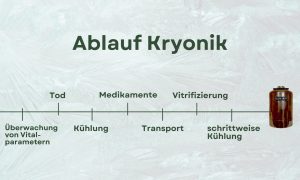
So how exactly does the cryopreservation process work? If the ideal case applies and the team can start the procedure immediately after the declaration of death, blood circulation and breathing are first artificially restored with a mechanical cardiopulmonary resuscitation device (CPR device). This device works with pressurized oxygen and gets the circulation going much better than manual cardiopulmonary resuscitation.
Cooling as quickly as possible
What happens in all cases: the patient is covered with ice cubes and doused with cold water in order to cool the body as quickly as possible. The patient is then given cell-protecting, anticoagulant, antibiotic and anesthetic medications. Examples are sodium citrate (protects nerve cells), heparin (anticoagulant), minocycline (antibiotic) and propofol (anesthetic, also protects nerve cells). Now the cryonics team can transport the patient in the ice water bath to the facility, where they prepare the patient for further cooling.
Use of a preservation solution for long-distance transport
If the patient is far away from the cryonics facility and has to be brought there by plane, their blood is replaced by a preservation solution whose temperature is a few degrees above freezing and which keeps the cells in the body alive. This treatment is similar to those used by transplant surgeons to keep organs viable while they are transported across the country for transplantation - with the difference that here it is applied to the whole body. Relatively little known is how much this can increase survivability at cold temperatures: studies show that whole animals can survive up to three hours of storage on ice with the technology available today.10 They can survive even longer periods if the preservation solution is continuously circulated.11
In some such cases, Alcor also uses a procedure called FCP (Field Cryoprotection). In this procedure, at least the head is already vitrified at the place of death (see next paragraph) and the patient is brought to the facility at -79°C on dry ice instead of in ice water.
Vitrification - artificial circulation for introducing the cryoprotectant
At the cryonics facility, an artificial circulation is first established. For this purpose, either the vessels of the neck are opened (in order to preserve the brain in particular as well as possible), or the chest is opened and tubes are inserted into the large vessels leaving the heart. Then a cell-protecting solution flows into the body via an artery and flushes the bloodout via a vein. The cryoprotectant (a liquid that prevents ice crystals from forming during cooling, which would tear the tissue) is added to the solution in increasing concentration until it makes up about 70% of the mixture. This ensures that the cryoprotectant also reaches almost all cells and reliably vitrifies the body.
Is ice-free cryopreservation of the brain possible?
Some scientists have claimed that ice-free cryopreservation of the brain is not possible because the cryoprotectant does not reach all parts of the brain.12 However, vitrification uses exactly the same vessels that constantly supply the brain with oxygen and nutrients. Ice-free preservation of the brain has been demonstrated both in the laboratory13 and in a few selected cases of cryopreserved members14. It is true that the blood-brain barrier delays the uptake of the cryoprotectant. The consequence of this, however, is that water is drawn out of the brain by the osmotic imbalance that arises while the cryoprotectant is being introduced. This makes the brain even more resistant to the formation of ice crystals. However, the dehydration of the brain appears to lead to ultrastructural changes (changes in the fine structure of the brain that can only be made visible with electron microscopy), which is indeed a still unsolved problem of cryonics. In "good" cryonics cases, dehydration of up to 50% of the total brain volume can be observed. At the moment, we do not yet know to what degree the lack of fluid will still allow the function of the brain to be restored in the future - if this will be possible at all.
Gradual cooling of the patient
Replacing the blood with the cryoprotectant takes several hours and takes place at a body temperature of about 0°C. The patients are then placed in a cooling box and cooled under computer control: liquid nitrogen is injected and evaporates, and a fan circulates the nitrogen gas at nearly -125°C. The aim is to cool all parts of the patient below -124°C (the temperature at which the cryoprotectant solidifies and changes into a glass-like state) as quickly as possible in order to avoid any ice formation. This takes about three hours, at the end of which the patient is "vitrified" (has reached a stable ice-free state). The patient is then cooled further to -196°C over a period of several days using the same technique.
Cooling causes harmful fractures in the tissue
In principle, -125°C would actually be enough: as soon as the cryoprotectant is solid, all metabolic activity has come to a halt. However, -196°C is the temperature of liquid nitrogen, which is a safe, non-toxic, cheap and readily available coolant. Unfortunately, during further cooling, thermal stresses cause large-scale fractures in the tissue (for example due to uneven cooling rates, different expansion coefficients of bone and muscle, and so on), which is a problem that has not yet been solved. It is important to note that these fractures are not open wounds. A good comparison is an intact but cracked glass windshield. The fractures may sound like a serious problem. However, future medicine will probably be able to repair them well, because they cause no significant loss of information: the damage occurs on a larger scale and does not destroy any important structures (as would be the case with ice crystal formation). Alcor is currently testing a new storage system that works with warmer temperatures in order to avoid the fractures in the future.15 (One of our upcoming posts will take a closer look at a new approach that tackles this problem from a completely different angle: helium persufflation.)
Storing the patient in an insulated container
The patient is stored in a large insulated container filled with liquid nitrogen (for example, a Dewar flask), which is checked every day. All that is needed is to top up some nitrogen about once a week. The patient is stored head down so that, in the event of an accident with a major nitrogen leak, the head is protected for as long as possible.
A cryopreserved member shares a container with three others. In the case of neuro preservation, in which only the brain is put into cold sleep, there are usually around 45 brains stored together. The brains remain in the head during preservation, as this involves fewer risks.
For cooling, no electricity at all is needed - it is provided exclusively by the liquid nitrogen. This also refutes the misconceptions that a power outage would ruin everything or that storage causes a lot of CO2 emissions.
Will I lose my memories during cryopreservation?
We can be fairly sure that this is not the case. Very short-term memories (from the last 30 seconds up to a few minutes at most) are stored only in electrochemical activity, but everything beyond that takes the form of physical changes in the brain: changes in the synapses, in the levels of certain neurotransmitters, in the protein content and so on.16
Are these changes preserved during the cryopreservation process? To test this, researchers carried out a study in 2015 on the well-known model organism C. elegans (a roundworm). They used a method of sensory imprinting to test long-term olfactory memory in the worms. After being cryopreserved and revived, the worms were able to recall the induced olfactory memory. So the structures required for this had not been destroyed by freezing.17
In 2020, scientists in another study examined the effects of cryopreservation on the brain of a woman who had donated her body. The results again showed that there was no adverse effect on the thickness of the hippocampus or of the cerebral cortex - both regions that play a central role in storing memories.18
Brain fog: when memories are blurry
What could occur, however, is a temporary condition called "brain fog". This would mean that your own memories are initially somewhat blurry while the brain slowly resumes all its functions after revival. Short-term memory loss and brain fog are common side effects in heart attack patients. The reason is a temporary lack of oxygen in a certain area of the hippocampus, which leads to the death of the neurons there.19 Fortunately, scientists are already working on a way to restore the neurons in this area, so that we may no longer have this problem at all in the future.20
Cryonics: revival
Now we come to the most challenging part: revival. No one can currently say with certainty whether it will be possible to bring people out of the liquid nitrogen back to life. Several steps are necessary for this: the cause of death must be cured, the patient must be rejuvenated, the rewarming and restarting of brain and other bodily functions must succeed, and any damage that has occurred must be repaired. In addition, we must manage to reintegrate the patient into society. Klaus Sames speaks somewhat jokingly of perhaps first bringing some people who have been brought back to life into a cyberspace that simulates the 21st century, so as not to trigger a culture shock. This article by Tomorrow Biostasis provides a good overview of the prerequisites for successful reanimation.
The only certainty is that this requires technologies that we do not yet have available in the required form today. They are, however, quite foreseeable: artificial intelligence, tissue engineering, bioprinting and, above all, nanomedicine are making impressive progress. Robert Freitas, a pioneer of nanotechnology, published his 700-page book "Cryostasis Revival: The Recovery of Cryonics Patients through Nanomedicine" last year, in which he outlines a possible path to the reanimation and healing of cryopreserved people with the help of nanorobots.21 A summary of his book can be found here.
Challenges in reviving cryopreserved people
When rewarming, there are three problems in particular to solve: on the one hand, the toxicity of the cryoprotectant, and on the other hand, the formation of ice crystals. Furthermore, the tissue must be warmed evenly. If the body is simply warmed, the cryoprotectant liquefies and, because of its toxicity above the glass transition temperature, damages the cells. To prevent this, the cryoprotectant must be replaced by blood before rewarming. But then a strange phenomenon called recrystallization occurs: during the warming process, ice crystals can form anew and damage the tissue. The only option is therefore to thaw the body so quickly that no ice can form. We currently still lack the technology needed for this.
Nanowarming - magnetic nanoparticles for even warming
Researchers now repeatedly succeed in cryopreserving individual organs such as kidneys and rewarming them quickly and uniformly enough to keep them functional. One method used for this is nanowarming: magnetic nanoparticles that are introduced together with the cryoprotectant. We can excite these nanoparticles with radiofrequency fields, which leads to rapid and uniform warming.
The article "Vitrification and Nanowarming of Kidneys" describes a successful nanowarming experiment on a rat kidney.22 During the experiment, the researchers perfused rat kidneys with a cryoprotective solution and silica-coated iron oxide nanoparticles (sIONPs). They then excited the nanoparticles by applying a radiofrequency field. The vitrified kidneys were successfully rewarmed: modeling shows that both ice crystal formation and fractures were absent during these processes. However, the researchers found damage caused by the toxicity of the cryoprotectants used. Which means that we need to develop better cryoprotectants.23
So there is definitely still a lot of research work ahead of us before we can successfully rewarm a brain or an entire body with nanowarming.
Ultrasound for warming tissue
Another approach, pursued for example by Ramon Risco, is the warming of tissue by means of ultrasound.24 This approach is to be tested first on C. elegans and then on rodents, but can probably be scaled up as far as needed. You will soon learn more about this in our post on current research relevant to cryonics!
So there are still a great many problems to solve for a successful revival. However: time plays practically no role, since there is no expiration date for cryopreservation. Storage continues indefinitely (at no additional cost), and science keeps advancing.
Hossmann KA, Sato K. Recovery of neuronal function after prolonged cerebral ischemia. Science 1970 Apr 17; 168(3929): 375-6. doi: 10.1126/science.168.3929.375.
Hossmann KA, Schmidt-Kastner R, Grosse Ophoff B. Recovery of integrative central nervous function after one hour global cerebro-circulatory arrest in normothermic cat. J Neurol Sci 1987 Feb; 77(2-3): 305-20. doi: 10.1016/0022-510x(87)90130-4.
Dai J, Swaab DF, Buijs RM. Recovery of axonal transport in "dead neurons". Lancet 1998 Feb 14; 351(9101): 499-500. doi: 10.1016/S0140-6736(05)78689-X.
de Wolf A, Phaedra C, Perry RM, Maire M. Ultrastructural Characterization of Prolonged Normothermic and Cold Cerebral Ischemia in the Adult Rat. Rejuvenation Res 2020 Jun; 23(3): 193-206. doi: 10.1089/rej.2019.2225.
Haneda K, Thomas R, Sands MP, Breazeale DG, Dillard DH. Whole body protection during three hours of total circulatory arrest: an experimental study. Cryobiology 1986 Dec; 23(6): 483-94. doi: 10.1016/0011-2240(86)90057-x.
Taylor MJ, Bailes JE, Elrifai AM, Shih TS, Teeple E, Leavitt ML, Baust JC, Maroon JC. Asanguineous whole body perfusion with a new intracellular acellular solution and ultraprofound hypothermia provides cellular protection during 3.5 hours of cardiac arrest in a canine model. ASAIO J 1994 Jul-Sep; 40(3): M351-8. doi: 10.1097/00002480-199407000-00022.
Lemler J, Harris SB, Platt C, Huffman TM. The arrest of biological time as a bridge to engineered negligible senescence. Ann N Y Acad Sci 2004 Jun; 1019: 559-63. doi: 10.1196/annals.1297.104.
Vita-More N, Barranco D. Persistence of Long-Term Memory in Vitrified and Revived Caenorhabditis elegans. Rejuvenation Res 2015 Oct; 18(5): 458-63. doi: 10.1089/rej.2014.1636.
Canatelli-Mallat M, Lascaray F, Entraigues-Abramson M, Portiansky EL, Blamaceda N, Morel GR, Goya RG. Cryopreservation of a Human Brain and Its Experimental Correlate in Rats. Rejuvenation Res 2020 Dec; 23(6): 516-525. doi: 10.1089/rej.2019.2245.
Until now, the process of aging has been an inevitable part of human life. As time goes on, the human body undergoes changes at the cellular and molecular level that eventually lead to visible signs of aging - up to and including age-related diseases. A healthy lifestyle that includes regular physical activity, a balanced diet, sufficient sleep and avoiding harmful habits such as smoking is often regarded as the key to slowing down the aging process. But is a healthy lifestyle actually enough to stop aging and halt the aging process? And if not: does a healthy lifestyle at least significantly slow down the aging process?
Why do we age?
The biological aging process
The biological aging process is a complex interplay of genetic factors, environmental influences and lifestyle factors. Over time, cells lose functionality, and the body becomes more susceptible to diseases and degenerative changes. There are a number of factors that can influence this process by changing the speed at which it progresses. First, however, let's look at how aging can be divided into subcategories.
Primary aging
A basic distinction is made between primary and secondary aging. Primary aging is caused by cellular aging processes and thus defines the maximum achievable lifespan for a species. Primary aging comprises the biological processes that take place naturally in the body and cause us to age. For example, our body needs ATP for muscle contraction, among other things, and ATP is produced in the mitochondria. However, the production of ATP releases free radicals, which over time cause the mitochondrial DNA to mutate. As a result, the mitochondria can no longer produce ATP in the original way (oxidative phosphorylation + citric acid cycle), but only through the citric acid cycle, which creates an excess of electrons that causes various kinds of cell damage contributing to aging. No matter how healthily we live, we will not be able to prevent this aging process through a healthy lifestyle, because each of us needs ATP and the production of ATP automatically creates free radicals, which over time result in cell damage.
Secondary aging
The secondary aging process can be the result of, for example, diseases, lack of exercise, poor diet, poor air or the use of addictive substances. It occurs as a consequence of an (unhealthy) lifestyle. Secondary aging is therefore the part of aging that can actually be prevented by a healthy lifestyle.
Can primary and secondary aging be distinguished from each other?
The two subcategories serve rather to make clear that there are aging processes that cannot be influenced by a healthy lifestyle, but take place naturally in our body, no matter how healthily we live. In reality, however, primary and secondary aging do not really involve different biological changes at the molecular or cellular level. Rather, a poor lifestyle accelerates the aging process that takes place naturally and cannot be prevented without artificial intervention.
Limits of a healthy lifestyle
So anyone who pursues a healthy lifestyle in order not to age is merely preventing the part of aging that occurs in addition to the natural aging process, but not the natural aging process itself. And this is where rejuvenation research comes in.
Rejuvenation research and primary aging
Rejuvenation research aims to reverse aging. Unlike people who aim to prevent secondary aging by living healthily, rejuvenation research aims to reverse primary aging in addition to secondary aging. Since primary aging determines the maximum lifespan a species can reach, successful rejuvenation research would not only ensure a healthier life, but even a longer, healthier life. If rejuvenation therapies were applied and improved regularly, it would even be conceivable that the maximum lifespan would increase significantly (Longevity Escape Velocity).
Does a healthy lifestyle at least significantly slow down the aging process?
First of all: this question is not easy to answer, and perhaps that is why it is not yet widely known that a healthy lifestyle has a comparatively small effect. But what makes this question so hard to answer?
To give a well-founded answer to this question, all options for a healthy lifestyle would have to be considered. In addition, you would need measurements of the extent to which this or that lifestyle affects mean and maximum lifespan. However, to capture the effect on lifespan in humans, a corresponding study would have to run for several decades - and so far there are not many of those. Nevertheless, we have taken a look at the available data for you.
Calorie restriction as one of the most effective lifestyle interventions
Calorie restriction is the reduction of energy intake without malnutrition. It is considered one of the most effective lifestyles for a long, healthy life.
Calorie restriction (CR) is, to date, the most successful intervention to delay ageing progression or the development of age-related chronic diseases.1
And yet calorie restriction probably only extends life expectancy by 2-3 years.2
So the intervention that is considered the most effective probably only has a life-extending effect of 2-3 years. This effect is so small that most people would probably accept living 2-3 years less rather than reducing their calorie intake. After all, it is often not easy to reduce your calorie intake, or it can become expensive over time if you instead take so-called CRMs (caloric restriction mimetics), which are supposed to produce the positive effects of calorie restriction without you having to watch your calorie intake.
Blue Zones - regions of longevity
Blue Zones are regions in which the people living there live longer on average than the average person living in other regions. The figures that show this are mostly based on demographic data. Blue Zones include, for example, Okinawa in Japan, Sardinia in Italy and Loma Linda in the United States.
Blue Zones are so interesting because you can look at the lifestyle of the people living there and draw conclusions about which lifestyle is particularly healthy, either by comparing the lifestyles of the different Blue Zones with each other to find commonalities, or by looking for differences from the regions that are not Blue Zones.
It can therefore be assumed that people who live in the Blue Zones do a lot of things "right" with their lifestyle. So how much longer do these people live, who do a lot of things right, i.e. live very healthily?
In 1995, the mean life expectancy of the inhabitants of Okinawa was 1.5 years higher than that of the inhabitants of mainland Japan, and the difference in maximum life expectancy was 3.8 years. Compared with Americans, the mean lifespan is 4.9 years higher - still very little.3
So even people who live very healthily - whatever their healthy lifestyle looks like - live on average only 5 years longer than people who lead an average lifestyle.
Another (possibly even simpler) way to measure the effect of a healthy lifestyle with today's means is to compare the life expectancy of different countries. Japan, for example, is known for having one of the highest life expectancies in the world overall. Reasons for this are its well-developed healthcare system, its high hygiene standards and above all its healthy diet: lots of vegetables, fish, seafood, rice and green tea. Nevertheless, although Japan ranks 4th in the list of all countries by average life expectancy, it is only 4.2 years ahead of the USA, which ranks only 48th.4
Conclusion: Is it enough to live healthily in order not to age? Is it at least enough to live healthily in order to age healthily?
No! A healthy lifestyle only prevents secondary aging, which - as the name already suggests - is not the "main aging process", but merely accelerates it. So with a healthy lifestyle, you are only preventing the aging process, which is happening anyway, from happening even faster. A healthy lifestyle can influence the speed of the aging process, but it cannot stop it. This is also where the 3-5 years come from that you can gain with today's measures for a "healthy lifestyle".
Whether that is enough for you, i.e. whether you see no need to campaign for more rejuvenation therapies instead of or in addition to a healthy lifestyle, even though rejuvenation therapies could reverse primary aging and thus potentially bring about a considerably greater increase in maximum lifespan, is something everyone has to decide for themselves.
Sources
López-Lluch G, Navas P. Calorie restriction as an intervention in ageing. J Physiol. 2016 Apr 15; 594(8): 2043-60. doi: 10.1113/JP270543. https://www.ncbi.nlm.nih.gov/pmc/articles/PMC4834802/ (last accessed: December 6, 2023)
Willcox BJ, Willcox DC, Todoriki H, Fujiyoshi A, Yano K, He Q, Curb JD, Suzuki M. Caloric restriction, the traditional Okinawan diet, and healthy aging: the diet of the world's longest-lived people and its potential impact on morbidity and life span. Ann N Y Acad Sci. 2007 Oct; 1114: 434-55. doi: 10.1196/annals.1396.037. https://citeseerx.ist.psu.edu/document?repid=rep1&type=pdf&doi=d60c36654c81af95c02fdf8e428971fab2f392c6 (last accessed: December 6, 2023)
How many organizations actually offer the cryopreservation of humans - and how do they differ?
We will focus here on the four most relevant providers (Alcor Life Extension Foundation, Cryonics Institute, KrioRus and Tomorrow Biostasis) and compare them. However, there are certainly other facilities that are worth mentioning, for example Oregon Cryonics (since 2023 Sparks Brain Preservation) and Trans Time in the USA, Cryonics Germany, which offers neuro storage in Germany - or also those that cover other parts of the world. Examples of these are Southern Cryonics in Australia and the Shandong Yinfeng Life Science Research Institute in China.
When looking for the provider that is best suited to you, there are various points to consider. Probably the most important question is how quickly it can reach you in the event of a sudden death. After all, the first hours after the declaration of death are the most important because of the decay processes that set in rapidly.
We compare the four providers mentioned according to the most relevant criteria in a table and then discuss each of them individually. Important: This text is intended only as an initial orientation. If you are interested in a cryonics contract, we strongly recommend that you do furtherresearch, take into account all the circumstances of your own case and then contact the provider of your choice before you make a final decision.
The four most important cryonics organizations compared
Alcor
Cryonics Institute
KrioRus
Tomorrow Biostasis
Year founded
1972
1976
2003
2019
Services
Whole-body and
neuro preservation
Whole-body,
DNA and
tissue
preservation
Whole-body,
neuro, DNA and tissue
preservation
Whole-body and neuro preservation
Price of cryo-
preservation
Whole body for
$200,000, neuro for
$80,000
Whole body for
$28,000
or
$35,000
Whole body for €36,000, neuro for
€18,000
Whole body for
€200,000
Membership fee
$55 per month
$1,250
one-time or
initially $75
and then $120
per year
yes - own standby
teams for members
near the
facility - otherwise via
an external service
optional via
an external
service
optional
yes - standby teams
in Berlin, Amsterdam and Zurich
Research activity
yes
partly
yes
yes
Preservation of
pets
yes - for members
yes - for members
yes - for members
yes - for members
Alcor Life Extension Foundation
The oldest and most renowned cryonics facility is the Alcor Life Extension Foundation. It is located in Scottsdale, a city in the US state of Arizona. The city lies in a region where the risk of natural disasters is very low, in order to ensure long-term safety for the cryopreserved members.
Alcor illustrated this with a risk map that summarises four types of natural disasters: earthquakes, hurricanes, tornadoes and blizzards. Scottsdale lies in the area with the lowest risk. Even a lower risk is still significant over a very long period of time, though. The map is no longer available from Alcor.
Alcor offers both whole-body and neuro preservation. In the latter, only the brain is stored, which, according to current knowledge, is the seat of memory, identity and personality. The organization also has an in-house standby team for people who are near the facility. This is a team of medical professionals that is sent to a member's location even before the foreseeable death of that member in order to begin the procedure immediately after the legal declaration of death. Terminally ill members are therefore advised to move to the area before their legal death. Under the standby program, they are entitled to relocation assistance of up to 10,000 US dollars. If, however, the patient is farther away, Alcor works with an external service. This service takes care of standby, stabilization and transport (SST). Alcor currently uses the companies Suspended Animation, Inc. and International Cryomedicine Experts for this.
Another special feature of Alcor: if a family member has already signed a contract, there is a discount for additional family members: 33 dollars per month for each adult and eight dollars per month for children.
Alcor uses the cryoprotectant M22, which was developed by the cryobiology company 21st Century Medicine. M22 is currently the best-documented cryoprotectant and, according to Alcor, promises the best overall results. However, this also comes at a price. Each use of M22 costs a mid-five-figure amount, which increases the cost of cryopreservation many times over.
The Cryonics Institute, founded in 1976 by Robert Ettinger, is located in Clinton Township (US state of Michigan). The price there is so much lower mainly because the costs of standby and transport are not included. Nevertheless, the Cryonics Institute is still cheaper overall than Alcor or Tomorrow Biostasis - the difference is just not as big as it seems at first glance.
Unlike the other three providers we analyze here, the Cryonics Institute has specialized in whole-body preservation.
The Cryonics Institute offers both an annual and a lifetime membership. With the former, you pay a one-time fee of $75 and then $120 per year. In this case, the cryopreservation costs $35,000. With the lifetime membership, the member pays a one-time fee of $1,250, and the cryopreservation costs $28,000. Last-minute cases (provided they can be carried out and are accepted) cost $45,000.
The Cryonics Institute uses the cryoprotectant VM1. Although VM1 is somewhat less well documented, it has a comparatively low price of only a few hundred euros per application.
KrioRus
For a long time, KrioRus was the closest option for cryonicists from Europe and Asia. It offers whole-body and neuro preservation as well as the storage of DNA. In addition, KrioRus is the only one of the four organizations compared here that does not accept funding through life insurance.
Tomorrow Biostasis
Tomorrow Biostasis is the youngest of the four facilities offering cryopreservation - and also the first in Central Europe. The Berlin startup has a standby team in Berlin, Amsterdam and soon also inZurich. At Tomorrow Biostasis, the entire sign-up process can be completed online. Since the startup has only existed since 2019, it does not yet have as many members as Alcor or CI. The average age of its members is 36, which is why the company has not yet cryopreserved any of its own members. However, its employees regularly support cases of non-members.
Like the Cryonics Institute, Tomorrow Biostasis uses VM1 for cryopreservation, but a slightly modified version of the agent that is produced directly by the company's research department.
Cryonics (also called biostasis) is Plan B for all people for whom the first rejuvenation therapies are likely to come too late. In cryonics, the body (or, in the case of neuropreservation, only the brain) is graduallycooled down to -196°C after the pronouncement of death and finally stored in liquid nitrogen. At this temperature, all biological activity stops. The goal is to preserve the body until future technologies make it possible to revive this person and eliminate the cause of death. The term comes from the Greek word "kryos", which roughly translates as "frost" or "icy cold".
History and status quo of cryonics
The American college teacher Robert Ettinger is considered the pioneer of cryonics. In 1962 he published the book "The Prospect of Immortality"1, thereby launching the cryonics movement. In 1967, the first person had himself frozen - James Bedford, a psychology professor from the USA.2 Today, around 500 people worldwide are preserved in dedicated facilities, and over 4,000 have already signed a contract.3 They include some celebrities, as this list shows.4
Cryonics providers
The three largest providers worldwide are the Alcor Life Extension Foundation (Scottsdale, Arizona), the Cryonics Institute (Clinton Township, Michigan) and KrioRus (Moscow, Russia). But there are also organizations offering cryonics in Europe and even in Germany: for example, the Berlin start-up Tomorrow Biostasis. In addition to neuropreservation in Germany, the interest group Cryonics Germany also offers an opportunity for exchange and helps with legal, financial, organizational and technical questions.5
Cryopreservation is already used routinely for heart valves, larger blood vessels, human skin, sperm and fertilized egg cells (see in vitro fertilization).6 The most important step today: vitrification. In this process, the body fluids are replaced by a so-called cryoprotectant. This is necessary because freezing normally leads to the formation of ice crystals, which destroy the cell membrane and thus the tissue. When cooled, the cryoprotectant takes on a glass-like state without forming crystals.7
But how are people who are already dead supposed to be able to live again in the future? Death is not a single event, but rather a neurological process that begins as soon as the heart stops beating.8 The goal of cryonics is to interrupt and stop this process - within a time window in which it could be reversible in the future.9 Doctors declare a patient dead when they can no longer bring the patient back to life with currently available medicine. In the past, this was the case with cardiac arrest. Today, cardiopulmonary resuscitation, developed in the 1950s, saves people all over the world every day who have suffered cardiac arrest. Science is constantly pushing the boundaries of what is considered "dead".
Cryonics aims to push these boundaries further: it ensures that the patient's condition does not deteriorate any further and gives the far more advanced technology of the future a chance to fix the patient's problem and bring them back to life. In this respect, cryonics is merely an extension of emergency medicine - a kind of ambulance to the future.10 Even after biological immortality has been achieved, it will still be useful, for example to prevent deaths from accidents or diseases not related to aging.11
A person's death is only final when the structure necessary for memory and personality (i.e. the information that makes up a person) has been destroyed to such an extent that it is theoretically impossible to restore the person. This concept is known as information-theoretic death.12
Successes in cryopreservation so far
What successes have there been so far? We have not yet managed to rewarm and revive people. However, with individual larger organs such as kidneys, the process already works. In 2009, for example, a research group led by the cryobiologist Greg Fahy succeeded for the first time in vitrifying and cryopreserving a rabbit kidney and transplanting it into another rabbit in such a way that it continued to function normally.13 A study in 2015 showed that model organisms (nematodes) can be cryopreserved and revived with their memories intact.14 Also under Fahy's leadership, researchers in 2015 vitrified and rewarmed rabbit and pig brains for the first time in such a way that the neural connections throughout the entire brain (the so-called connectome) remained almost perfectly preserved.15 You can find more about the method used for this in our post on current research in the field of cryonics!
The problem: even with vitrification, the cryopreserved body still suffers considerable damage - possibly too much damage to be revived by rewarming in the future. (Another possibility for revival is mind uploading.16 But we are still far away from that, because we still have a lot to learn about how the human brain works.) The vitrification of larger animals or humans is not yet reversible because preserving such large structures requires a great deal of cryoprotectant. This makes it impossible to restore cell function with currently available technology.
Helium persufflation: an approach with great potential
Fortunately, there is a new approach that could soon change this: helium persufflation. In this method, cold helium is pumped through the blood vessels. The big advantage is that the body can be cooled to below -120°C much faster than with the old method. In addition, this makes it possible to avoid the fractures in the tissue that still occur today. Apart from cryonics, the approach also has the potential to save countless lives: organ transplants would be possible on a much larger scale than today. Keinice Bio, the company advancing this technology, is funded by the LEV Foundation, among others.17
How is revival supposed to work?
What could revival look like in the future (apart from uploading)? The question is difficult to answer because it depends on technologies that do not yet exist in the necessary form today. However, current technological advances are promising - among others in fields such as tissue engineering, 3D bioprinting and nanotechnology. The latter would probably be necessary to truly comprehensively repair the damage at the molecular level that occurred before and during preservation. In 2022, the nanotechnologist Robert Freitas published the 700-page book "Cryostasis Revival: The Recovery of Cryonics Patients through Nanomedicine"18, in which he outlines a possible path to the reanimation and restoration of health of cryopreserved people. Here19 is his summary of the book, in which he briefly presents the concept he has worked out.
Financing, legal aspects and more about cryonics
That leaves only the question of the legal framework and financing. We will discuss this in detail in one of our upcoming posts in the cryonics series. This much in advance: for most people, a cryopreservation contract is quite affordable - through life insurance. And it is also possible to have pets cryopreserved: the Alcor Life Extension Foundation already stores almost 100 animals in liquid nitrogen.20
Fahy GM, Wowk B, Pagotan R, Chang A, Phan J, Thomson B, Phan L. Physical and biological aspects of renal vitrification. Organogenesis 2009 Jul; 5(3): 167-75. doi: 10.4161/org.5.3.9974. PMID: 20046680; PMCID: PMC2781097. ↩︎
Vita-More N, Barranco D. Persistence of Long-Term Memory in Vitrified and Revived Caenorhabditis elegans. Rejuvenation Res 2015 Oct; 18(5): 458-63. doi: 10.1089/rej.2014.1636. Epub 2015 Aug 20. PMID: 25867710; PMCID: PMC4620520. ↩︎
From August 17 to 20, 2023, the Longevity Summit Dublin took place for the second time; it is co-organized by the well-known aging researcher Aubrey de Grey and is one of the most important conferences in the field of rejuvenation research.
With a total of about 350 participants, the conference has grown significantly compared to last year. This time, eight members of the Party for Biomedical Rejuvenation Research attended.